Criticism on Scientific Management

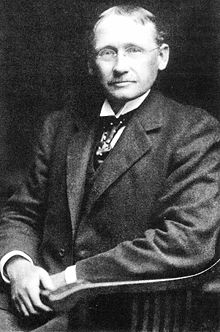
Photograph 01
Taylor was right in the sense that he could understand the facts the
true environment for application of SM exists provided that both labor and
management pursuer for same goal: as labor management harmonious relationship
can avoid conflict. Criticism arise here because of his mistake as he believed
that there would be no conflict “over how to divide the pie as long as the pie
was large enough”(Taylor as cited in Loke,1982)
Beside, Locke, John Commons and Robert Hoxie also agreed that SM would
incite conflict between employees and employers. Both commons and Hoxie nicely
clarified the reason of conflict. In the findings of commons: intense
standardization of process and system is responsible for the conflict (Frey, 1913)
Commons also questioned “can SM deals scientifically with organization as well
as individuals” (commons, 1911:464)
Hoxie found that time motion study resulted in organization of standard
time within which workers had had to complete their task otherwise they were
negatively revived. Here they could not take it easy and could not find scope
for soldiering. So workers coldly accepted SM and they collectively opposed it.
So it is clear that scientific management has failed to escape labor-management
conflicts which are the mother of all criticisms.
Workers have to works and hours, weeks and weeks to meets standards:
they are greatly affected both physically and mentally for rushing towards
meeting standard output within standard time (Managementstudyguide.com.2015)
Very often, many industries face workplace accident due to such dehumanization,
in 2010 a major producer of Apple products: Foxconn, had outbreak in factory
worker suicide due to exhausting working conditions and an average of 120
overtime hours per month (Moore, 2010)
SM defines motivation very narrowly: it states that productivity of
workers can be insured by only monetary incentives, But in reality workers care
about not only money but also about social well-being, their development
opportunity. (Priestley, 2005)
Maslow in his hierarchy of need theory mentioned that people move
towards archiving higher order needs after fulfillment of lower order needs,.
But in the case of SM, workers have to work for the same position at standard
rate fallowing standard instructions prescribed by management: here although
workers can fill up their financial or monetary need, they fail to achieve
esteem of self-actualization needs (hubpage.com, 2013)
Another notable criticism in SM is that it focuses on individual
performance rather than group performance: but today’s business world is more
complex whereby teamwork is needed to be succeeded.
Marshall criticized another drawback of absolute SM that is fixation of
absolute wage rate by planning department: because wage rate is needed to be
modified in response to be changes in economic circumstances (Marshall 1919: 384)
In the words of Taylors, workers have to obey instructions from their bosses
and it is unnecessary to explain to workers why they have to fallow, that is “do
as you are told” , But in the modern world, companies precisely explain
employees about its vision and mission and goals, that is, they are aware of
what they do and why they do (Peters & Waterman)
SM is the father of modern business and industry. It is a science that
contains knowledge based on research and study and an art its application
shaped the industry. Basically criticisms are related with its careful application, not the theory itself: the explanation is that if the theory is
applied prudently in the right place in a right way then the result can be distinguishable.
But the theory is applied in the wrong area and in a wrong way then it will
backfire.
References,
01. Backer, Patricia Ryaby (1998). Scientific MGT. Available
at
02. Caldari, Katia,
(2007) Alfred Marshall’s critical analysis of scientific management
03. HubPages.com.2013,
scientific management: Application of Fredrick Winslow Taylor‘s theory in counterparty
management, Available at: wowguidemaster.hubpages.com/…/Scientific-Management.
04. Locke, A. (1982) the
ideas of Fredrick W. Taylor: An evaluation, Academic of Management Review, 7(1)
14-24.
05. Managementstudyguide.com,(2015)
Criticism of Scientific Management, Available at:
06. Maqbool,M.,
Zakariya, A, & Paracha,A.N.(2011). A critique on scientific management,
interdisciplinary journal of Contemporary Research in Business, 3(4), 844-854
07.Mindtools.com (2015) Fredrick Taylor and Scientific Management: Understanding Taylorisum and Early Management Theory, Available at:
https://www.mindtools.com/pages/articales/new/TMM_Taylor.htm
08. Peters, Tom &
Waterman, Robert (1988), In search of Excellence, Harper & Raw Publications.
09. Ralston, Shane, “Doing
versus Thinking: John Dewey’s Forgotten Critiques of Scientific Management”,
Acadaemia.edu. Available at:
Photographs

You have read a lot.Educating essay.
ReplyDeleteScientific management method could be identified as a dying one considered to modern trends in goobal context. Journal and book referencing would be better than web referencing in this style of discussion. Intext citation is missing in the final para and date not mentioned in the 9th para. However well structured and written. Couple of more examples would add more value to this article.
ReplyDelete