Thursday, November 30, 2017

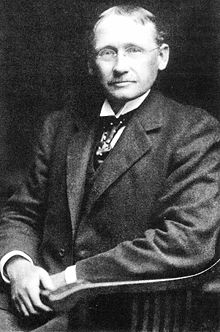
CRITICISM ON SCIENTIFIC MANAGEMENT

Wednesday, November 22, 2017

Talent Management

Wednesday, November 15, 2017

Psychological Contract

Tuesday, November 14, 2017

Learning & Development in Global Context


 Learning & Development in Global Context 

 Learning and Development define 

Learning and development is define as the processes of ensure that that the organization has the knowledgeable, skilled an engaged workforce it needs. It involves the facilitating acquisition by the
individuals and teams of knowledge and skills through experience, learning events and programmes provided by the organizations, guidance and coaching provided by the line managers and others, and  self directed learning activities carry out by individuals. According to Harrison (2009 : 8) L&D defined as fallows,    
"Primary purpose of learning and development as an organizational processes to aid collective            progress through the collaborative, expert and ethical stimulation and facilitation of learning and        knowledge that support business goals , develop individuals potential, and respect and build on            diversity".
According to the Armstrong,
"Learning and Development is the process of squaring and developing knowledge, skills, capabilities, behaviors and attitudes through learning of development experience".


E-Learning 


E-learning involves the use of computer, networked and web-based technology to provide learning material and guidance to individual employees. It can be delivered through a firm’s intranet system.
E-learning enhances learning by extending and supplementing face-to-face learning rather than replacing it. It enables learning to take place when it is most needed (just-in-time as distinct from just-in case) and when it is most convenient. Learning can be provided in short segments or bites that focus on specific learning objectives. It is ‘learner-centric’ in that it can be customized to suit an individual’s learning needs – learners can choose different learning objects within an overall package. The main drawbacks are the need for learners to be self-motivated, the time and effort required to develop and update e-learning programmes and, sometimes, the availability of computers. 
 

Why E-Learning has become more popular 

In the past 10 years, E-learning has increased in popularity. There are many benefits to E-learning for both the learners and the organizations that encourage their staff to do so. For companies looking add to train employees, online courses are an affordable, time-effective way to increase knowledge so more and more organizations are choosing online training over traditional training methods.

 is


Leading Global Companies using E-Learning Methods.   

Sweetrucsh, EI Design, Allen Interaction, Allen comm, Commlab India, Google, Facebook,    


We must understand that in global context, where learning and development is changing into new chapter, E-learning is playing major role in this change. It's more economical and easy to approach.   


References 

Harrison, R (2009) Learning and Development, 05th Ed, London CIPD

Armstrong, M and Taylor, S (2014). A Hand Book of Human Resource Management Practices, Kogan Page, 13th ed, UK.


Images 


Friday, November 3, 2017

Competency Based Staff Recruitment


Competency Based Staff Recruitment 


What is Competency based recruitment?

Competency based recruitment is a process of recruitment based on the ability of candidates to produce anecdotes about their professional experience which can be used as evidence that the candidates has a given competency. Candidates demonstrate competencies on the application form, and then in the interview.

The process is intended to be fairer than other recruitment processes by clearly laying down the required competencies and then testing them in such a way that the recruiter has little discretion to favour one candidate over another; the process assumes high recruiter discretion is undesirable. As a result of its perceived fairness, the process is popular in public services. Competency-based recruitment is highly focused on the candidates' story-telling abilities as an indication of competency, and disfavours other indications of a candidate's skills and potential.


Practice 

Having established the competency profiles for groups and roles, organizations can use the competencies as the standards for assessing candidates throughout the screening and selection process as well as advertising and communicating the organization’s requirements to potential applicants

Competencies support recruitment and selection by,
  • Contributing to the design of a well-articulated, efficient and effective recruitment and selection processes
  • Improving the transparency of the selection process by clearly communicating the behaviors employees must display for success in the job.
  • Providing, validated, fair and unbiased standards against which to assess applicant competencies to perform in the targeted job.
  • Creating efficiency by providing re-usable selection tools and processes 
  • Providing explicit, clear and transparent criteria on which to give candidates feedback on their performance in the selection process.
  • Providing standards for evaluating the success of the selection process – e.g., correlating the results of the selection process with competency-based on-the-job performance.

Some of the common benchmark competency-based practices in Recruitment and Selection include,


  • Interview and Reference Checking Guides – 
Template interview and reference checking guides are developed for varied types of jobs, including instructions and rating guides. These are made available to hiring managers and HR Advisors.

  • Notices of job requirements – 
A template is developed to define how competencies will be reflected in .notices regarding the requirements of jobs to be filled. As the competency profiles are completed, sample notices are developed for the varied types of jobs.

  • Template Interview and Reference Checking Guides – 
Template interview and reference checking guides are developed for roles/career streams and levels within Occupational Groups including instructions and rating guides. These are made available to hiring managers and HR Advisors.

  • Competency-based Track Record / Portfolio Reviews –
 Track record / portfolio reviews allow employees / applicants to document their past experiences and accomplishments that relate to the competency requirements for positions within the organization. Once completed, trained evaluators score the extent to which the required competencies are demonstrated in the written examples using standardized scoring criteria. Typically, the candidate / employee also provides references who can attest to the validity of the examples provided. Results can be used as part of the staffing process and / or for other purposes.

  • Competency-based Track Record / Portfolio Reviews – 
Track record / portfolio reviews allow employees / applicants to document their past experiences and accomplishments that relate to the competency requirements for positions within the organization. Once completed, trained evaluators score the extent to which the required competencies are demonstrated in the written examples using standardized scoring criteria. Typically, the candidate / employee also provides references who can attest to the validity of the examples provided. Results can be used as part of the staffing process and / or for other purposes.

  • Other Competency-based Assessment Methodologies –
A variety of other competency-based assessment methodologies can be incorporated into the selection process, including In-basket assessments, role plays or simulations of workplace situations that the employee will encounter, multi-source input (as appropriate), etc. When designing and implementing any methodology, it is important that it be defensible.


·         Training on Competency-based Selection –

 Managers must have the knowledge and skills to be able to apply the various competency-based
assessment methodologies noted above to arrive at valid selection decisions. Likewise, employees
must be able to participate effectively to provide an accurate picture of the competencies they
possess. Finally, both managers and HR professionals must be able to establish selection processes
that are both efficient and effective (i.e., reliable, fair, valid and unbiased). All of this requires
targeted training / orientation programs to ensure that all stakeholders have the necessary skills.

Implementation stages


Stage 1:
·    Define the policies and decision-rules for using competencies in the recruitment and selection processes
·    Identify considerations / guidelines for including information on competencies in notices of job requirements
·    Develop sample notices of job requirements as the competency profiles become available for use.
·    Customize or build an interview / reference checking question bank organized by competencies included in the competency profiles.
·    Customize or build other competency-based tools or processes that can be used across a number of occupational groups.

Stage 2:
·    As the competency profiles are completed for the job groups, develop and implement recruitment, and selection processes consistent with policy and tools defined in Stage 1. Review and evaluate the effectiveness and efficiency of these processes and adjust policies, procedures, templates, etc., as required.
·    Plan for and train managers and HR personnel on appropriate competency-based interviewing approaches. This training should be just-in-time – i.e., as competency profiles become available for the different job groups.
·    Plan for, design and implement an orientation / training program for employees on how to participate in a competency-based recruitment and selection as new processes are being implemented.
·    Collect data on the effectiveness of the new recruitment and selection process and make adjustments to the process, as required

References 


·       Dubois, D., & Rothwell, W. (2004). Competency-Based Human Resource Management. Davies-Black Publishing
·    Dubois, D., & Rothwell, W. (2000). The Competency Toolkit (Volumes 1 & 2). HRD Press
·    Lucia, A., & Lepsinger, R. (1999). The Art and Science of Competency Models: Pinpointing Critical Success Factors in Organizations. Pfeiffer
·    Shandler, D. (2000). Competency and the Learning Organization. Crisp Learning.
·    Spencer, L M. in Cherniss, C. and D. Goleman, eds. (2001) “The economic value of emotional intelligence competencies and EIC-based HR programs”, in The Emotionally Intelligent Workplace: How to Select for, Measure, and Improve Emotional Intelligence in Individuals, Groups and Organizations. San Francisco, CA: Jossey-Bass/Wiley
·    Spencer, L., & Spencer, S. (1993). Competence at Work: Models for Superior Performance. Wiley.

Tuesday, October 24, 2017


HRM framework


    HRM as conceived in the 1980s had a conceptual framework consisting of a philosophy underpinned by a number of theories drawn from the behavioral science and from the field of strategic management, human capital and industrial relations.The HRM philosophy has been heavily criticized by academics as being managerialist and manipulative but this criticism has subsided, perhaps because it became increasingly evident that the term HRM had been adopted as a synonym for what used to be caled personal management as noted by Storey (2007;6) ' In its generic board and popular sense it simply refers to any system of people management'. 


Today's practice  


    HRM practice is no longer governed by the original philosophy - if it ever was. It is simply what HR people and line managers do. few references are made to HRM conceptual framework. This is a pity - an appreciation of the goals, philosophy and underpinning theories of HRM and the various HRM models provides a sound basis for understanding and developing HR practice. But account needs to be taken of the limitations of that philosophy as expressed by the critics of HRM


Objectives of HRM, 


    The goals of HRM are to,
  • Support the organisation in achieving its objectives by developing and implementing HR strategies that are integrated with the business strategy,
  • Contribute o the development of a high-performances culture,  
  • Ensure that the organization has the talented, skilled and engaged people it needs,
  • Create a positive employment relationship between management and employees and a climate of mutual trust,           
  • Encourage the applicant of an ethical approach to people management
'The mission of HRM is to support the viability of the firm through stabilizing a cost - effective and socially legitimate system of labour management'


Models of HRM


    The most familiar models defining what HRM is and how it operates are as follows,
  • The matching model :-  Fombrun et al (1984) proposed the matching model, which indicated that HR system and the organisation structure should be managed in a way that is congruent with the organizational strategy.
  • The Harvard Model :-  Beer et al(1984) introduced the Harvard model. They started with the proposition that; 'Human resource management involves all management decisions and actions that affect the nature pf the relationship between the organisation and employees - its human resources also they believed that Today many pressures are demanding a broader, more comprehensive and more strategic perspective with regard to the organisation's human resources
  • Contextual model :-  The contextual model of HRM emphasizes the important of environmental factors by including variables such as the influence of the social, institutional and political forces that have been underestimated in other models.
  • The 5 - P model :-     Formulated by Schuler (1992) the 5-p model of HRM describe how HRM operates under the five headings, 01) HR philosophy 02) HR policies 03) HR programmes 04) HR practices 05) HR processes
  • European model :- Brewster (1993) described this model as, 01) Environment 02) Objective 03) Focus 03) relationship with employees 04) Relationship with line managers 05) Role of HR specialist
  • The hard and soft model :- Storey (1989) and he wrote that; 'The hard one emphasizes the quantitative,  calculative and business - strategic aspects of human resources in as "rational"a way as for any other economics factor. 


Personnel Management Defined


Peter works for a company in personnel management. Personnel management is an administrative function of an organization that exists to provide the personnel needed for organizational activities and to manage the general employee-employer relationship. Let's see how Peter does it.Peter engages in planning and job analysis to determine his organization's current and future labor needs. He recruits employees with knowledge, skills and abilities that the organization needs. Peter and his coworkers will also help develop current employees through employee appraisal and training. He'll help ensure a safe and healthy workplace by making sure the organization complies with all occupational health and safety regulations.He also helps develop a compensation system, including pay and fringe benefits. Peter also helps develop policies that ensure his organization complies with federal and state employment laws. Finally, Peter and the personnel department are often the primary intermediaries between employees and the organization. They manage many aspects of the employee-employer relationship, such as handling employee grievances.


Human Resource Management Defined


Helen works in human resource management (HRM). Human resource management also involves the management of people in an organization. The job of human resource management is to ensure that the organization has the human capital it needs to accomplish its goals. 'Human capital' is a fancy way of describing employees with a certain set of knowledge, skills and abilities that can be used by an organization in a productive way. Let's take a quick look at what Helen and other people in human resource management do.
Helen ensures that the company is appropriately staffed, which includes job analysis, planning, recruiting and selection. Helen and her fellow resource managers also develop training and education programs to keep employees up-to-date on the skills and knowledge they need. Human resource management develops compensation plans just like personnel management.
Helen also makes sure that the company maintains a safe and healthy work environment. She develops personnel policies that ensure compliance with various employment and labor laws. Employee relations are another key responsibility. If employees have general questions or concerns about the organization, they go to Helen and the human resources department.

References


Armstrong,M and Taylor, S.,(2014) A hand book of HRM. Kogan Page. UK
http://study.com/academy/lesson/human-resource-management-vs-personnel-management.htm
https://www.google.lk/search?biw=1366&bih=662&tbm=isch&sa=1&ei=LXP9WdqoPIaUvQTczZWIDQ&q=hrm+photos&oq=hrm+photos&gs_l=psy-ab.3.0.0j0i8i30k1.118564.129449.0.133254.10.10.0.0.0.0.120.966.7j3.10.0....0...1.1.64.psy-ab..0.10.963...0i67k1j0i24k1.0.sWmW4g_efrc#imgrc=SZyKHKrkdJcc8M: